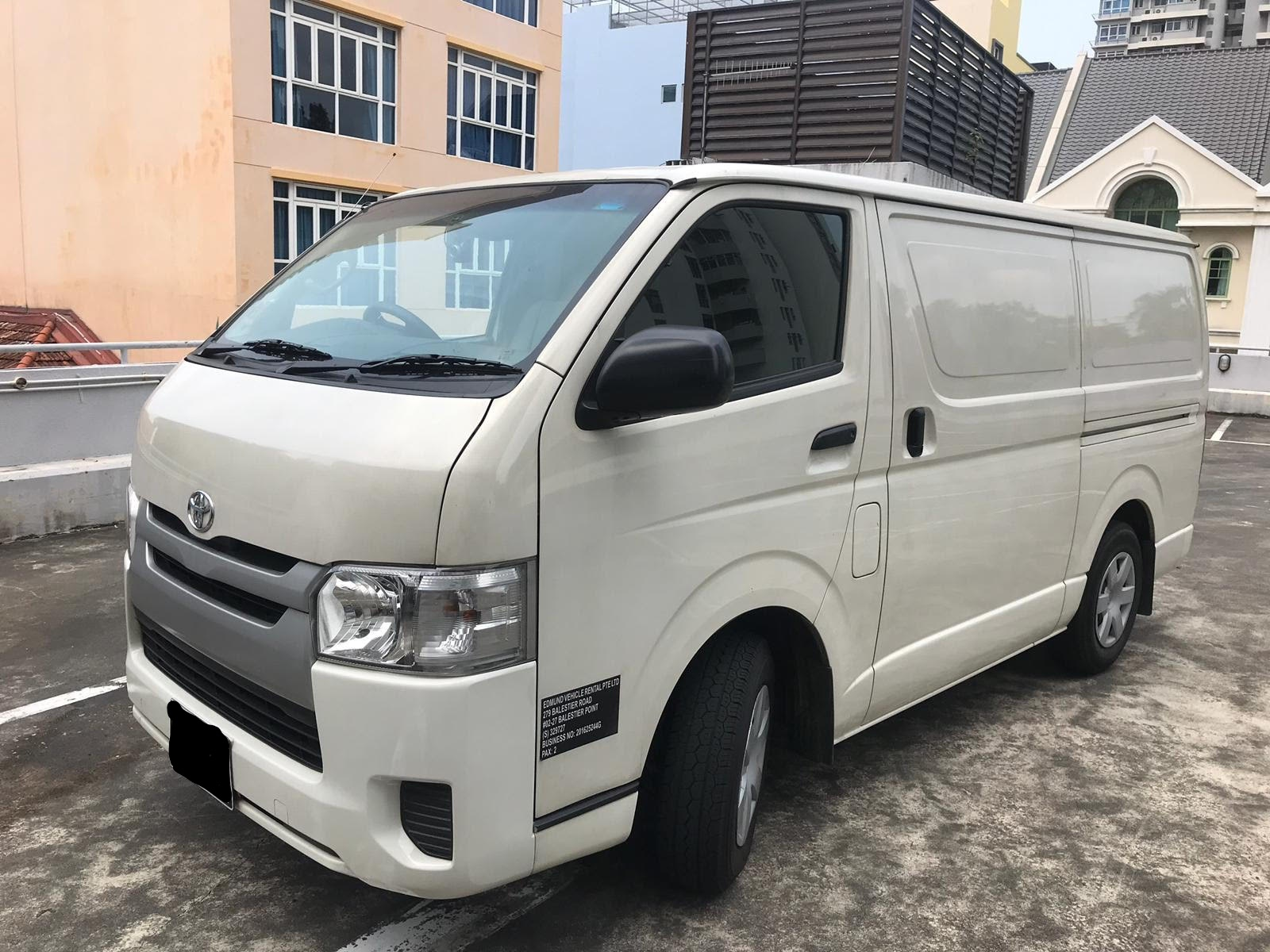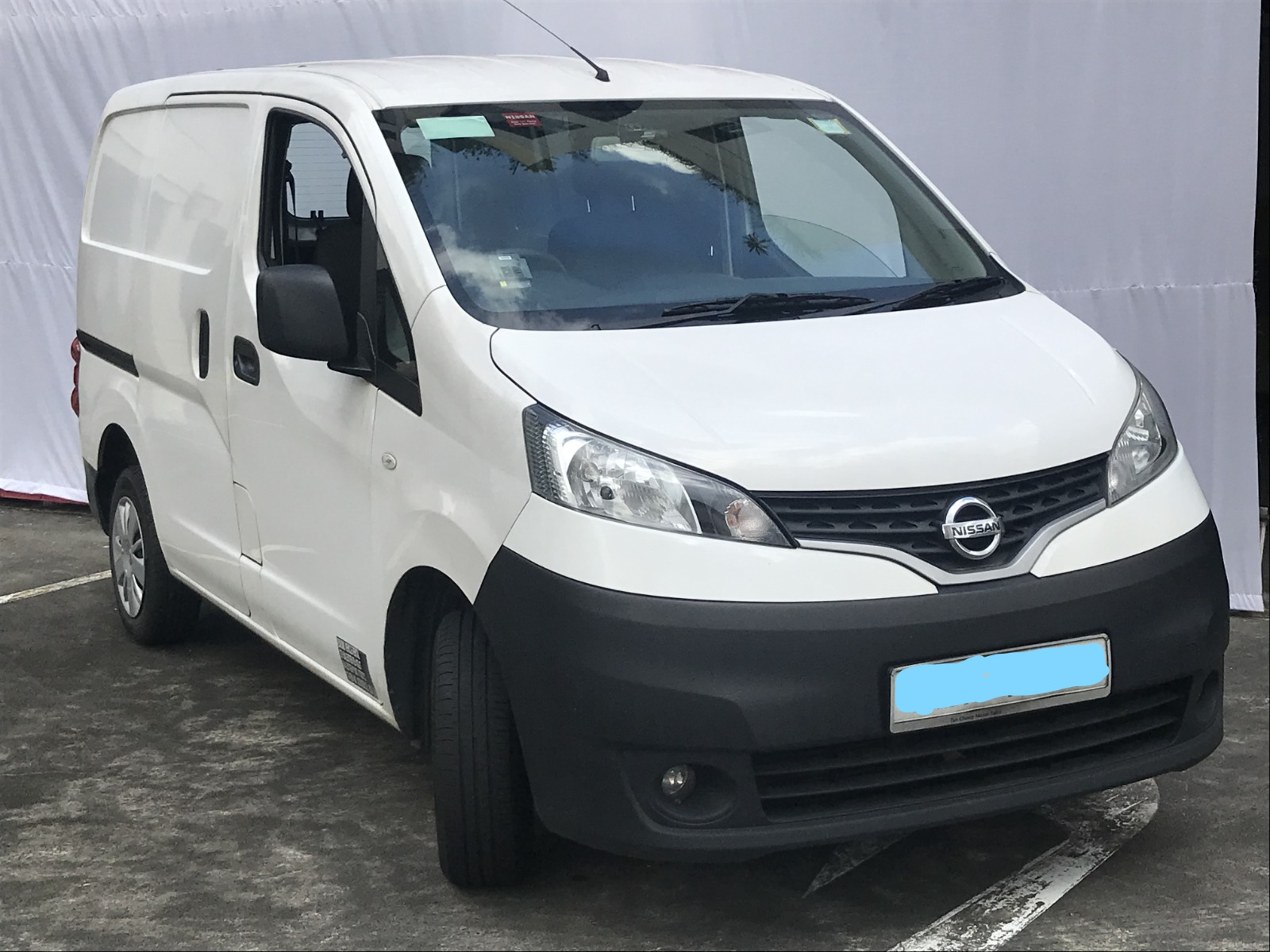
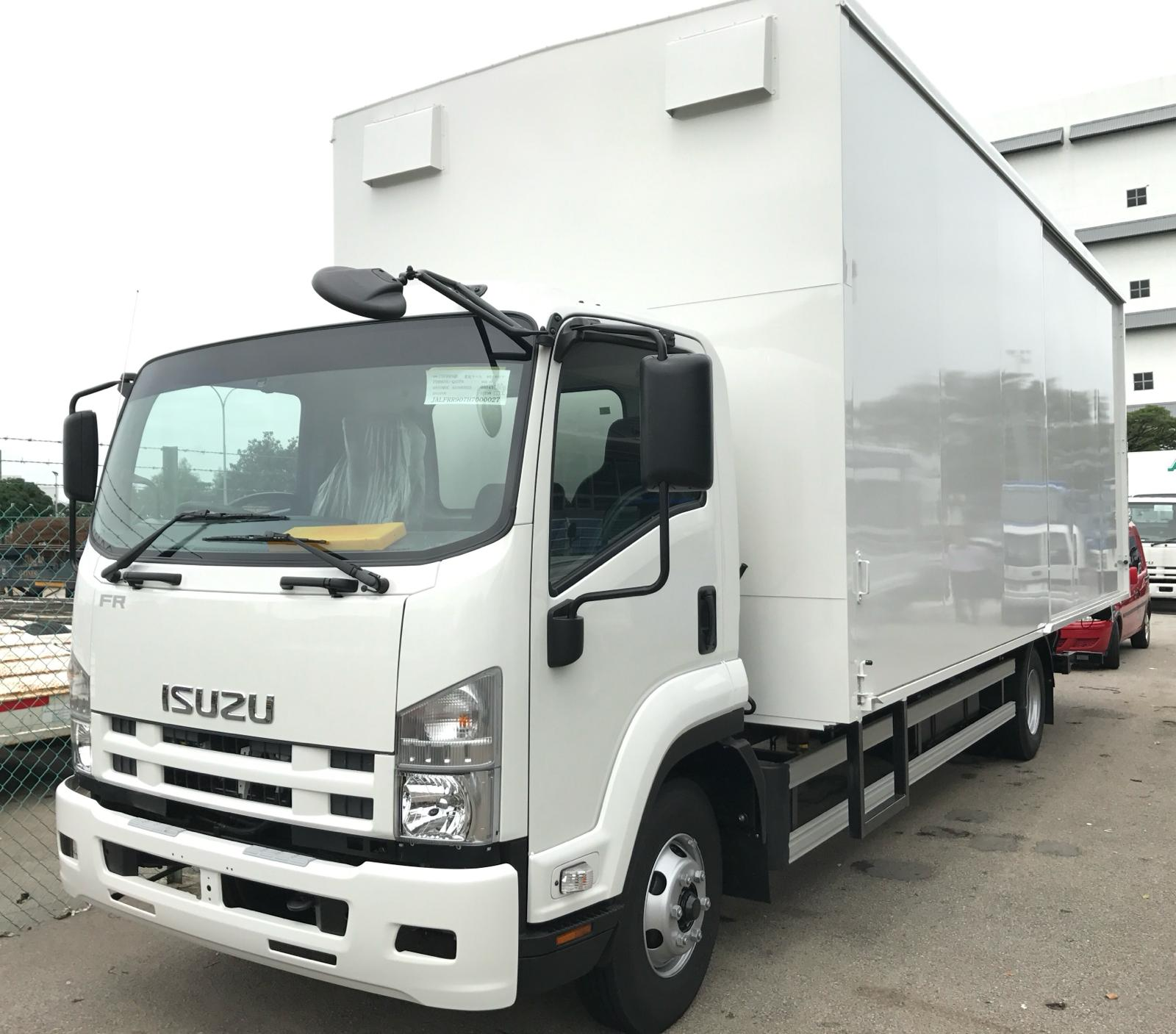
Before renting or leasing a commercial vehicle in Singapore, businesses must understand that the vehicle is not just a transport asset.
It is also subject to specific rules covering registration, road tax, inspections, driver licensing, loading practices, passenger carriage, maintenance and emissions compliance. These requirements can affect which vehicle a business can use, who is allowed to drive it, how it should be operated and what responsibilities must be managed throughout the rental or leasing period.
These rules for commercial vehicles in Singapore matter because vans, lorries and trucks often support essential business functions such as deliveries, site work, equipment movement, manpower transport and customer fulfilment. If a vehicle is not properly maintained, inspected, licensed, or used in accordance with regulations, it can result in penalties, delays, service disruptions, or unnecessary operational risk.
For companies comparing ownership or long-term leasing, the decision should therefore go beyond vehicle size and cost. Businesses should also ask who manages compliance, how maintenance is handled, whether the vehicle is suitable for the intended use and what support is available if regulatory or mechanical issues arise.
This guide expands on the key commercial vehicle rules in Singapore that businesses should know before renting or leasing. It explains the main compliance areas, how they affect fleet planning and why working with the right rental or leasing provider can help businesses operate with greater confidence.
Key Takeaways
- Commercial vehicle rules in Singapore affect how businesses register, operate, maintain and manage vans, lorries and trucks.
- Goods vehicles must be registered with the Land Transport Authority before they can be used on public roads.
- Key compliance areas include COE, road tax, vehicle inspections, driver licensing, emissions standards, safe loading and passenger carriage rules.
- Businesses must understand the difference between vehicle access and vehicle compliance before signing a rental or leasing agreement.
- A rental or leasing arrangement can reduce internal administrative pressure when maintenance, inspection planning and fleet support are handled by the provider.
- The right partner matters, especially for businesses that rely on commercial vehicles for logistics, site support, deliveries or operational mobility.
What Rules for Commercial Vehicles in Singapore Actually Cover
Commercial vehicle rules in Singapore cover the full vehicle lifecycle. They begin before a vehicle is registered and continue throughout its use on public roads.
For businesses, these rules typically include:
- Vehicle registration with LTA
- Certificate of Entitlement requirements
- Road tax renewal
- Periodic inspections
- Vehicle maintenance and roadworthiness
- Driver licence requirements
- Goods vehicle classification
- Maximum laden weight limits
- Passenger carriage rules
- Emissions compliance
- Vehicle modifications and approval requirements
- Insurance and operational documentation
Rules for commercial vehicles in Singapore are not isolated requirements. They affect one another.
For example, a vehicle may need a valid inspection before road tax can be renewed. A driver may need the appropriate licence to operate a heavy goods vehicle. A business transporting workers in a lorry must also understand specific passenger carriage and safety rules.
This means compliance with the rules for commercial vehicles in Singapore is not a single administrative task.
It is an ongoing system that requires coordination between management, drivers, operations teams and the vehicle provider.
For businesses with one vehicle, this may already require careful tracking.
For businesses managing several vehicles, the complexity grows with every additional van, lorry or truck added to the fleet.
Types of Commercial Vehicles Businesses Commonly Use
Before renting or leasing a commercial vehicle, businesses should understand how goods vehicles are classified in Singapore. These categories are not based only on vehicle appearance or business use. They are primarily defined by maximum laden weight (MLW), the maximum permitted weight of the vehicle when fully loaded.
Light Goods Vehicles
Light Goods Vehicles are goods vehicles with an MLW of up to 3,500kg. This category commonly includes vans and smaller goods vehicles used for parcel delivery, service teams, retail distribution, catering, equipment transport, and compact cargo movement.
For businesses, this category is often suitable when cargo loads are manageable and the vehicle needs to remain practical for urban routes, loading bays and tighter access points.
Heavy Goods Vehicles
Heavy Goods Vehicles have an MLW from 3,501kg to 16,000kg. These vehicles are used for larger cargo loads, heavier equipment, construction support, furniture movement, industrial supplies and more demanding logistics needs.
Businesses considering lorry rental in SG should check the vehicle’s MLW before confirming a rental or leasing arrangement. The MLW can affect driver licensing, loading practices, access restrictions, inspection planning and whether additional safety equipment may apply.
Very Heavy Goods Vehicles
Very Heavy Goods Vehicles have an MLW above 16,000kg. These are generally used for more specialised or industrial transport needs where load planning, route suitability, site access and safety coordination become more complex.
For most SMEs, this category requires careful assessment before use, especially if the vehicle will be deployed for project-based movement, heavy equipment or regulated cargo.
Goods-Cum-Passenger Vehicles
Goods-cum-passenger vehicles, or GPVs, have an MLW of up to 5,000kg and are designed to carry both goods and passengers within specific regulatory limits.
Businesses should not assume that every goods vehicle can be used to transport workers or staff. The vehicle’s classification, seating arrangement, passenger capacity and current worker transport rules should be reviewed before signing any rental or leasing agreement.
Why MLW Matters When Choosing a Rental or Leasing Vehicle
MLW affects more than vehicle size. It can influence:
- Which licence a driver needs
- How much cargo the vehicle can legally carry
- Whether the vehicle is suitable for worker transport
- What loading practices are required
- Whether road, site or car park restrictions may apply
- How inspections and compliance checks should be planned
- Whether speed limiter requirements may apply for certain lorries
For this reason, commercial vehicle rules in Singapore should be reviewed before choosing a van, lorry or truck. A vehicle that appears suitable by size may not be suitable once load weight, driver eligibility and operational restrictions are considered.
Key Commercial Vehicle Licensing in Singapore Requirements
Commercial vehicle licensing in Singapore affects both the vehicle and the person operating it. Businesses need to consider both areas before renting or leasing a commercial vehicle.
Vehicle Registration
All goods vehicles must be registered before they can be used on public roads. Registration ensures that the vehicle is recognised by LTA and meets the necessary requirements for use in Singapore.
For businesses purchasing vehicles, this process can involve registration documents, technical approvals, fees and other administrative steps. For businesses renting or leasing from a provider, the provider usually owns or manages the vehicle registration process.
This is one reason many companies prefer a rental commercial vehicle arrangement. Instead of managing registration requirements internally, they can access vehicles that are already registered, roadworthy and prepared for commercial use.
Certificate of Entitlement
In Singapore, a Certificate of Entitlement gives the holder the right to own and use a vehicle for a defined COE period. Goods vehicles and buses fall under Category C.
For businesses that purchase vehicles, COE represents a significant upfront commitment. COE prices also fluctuate, which can make acquisition planning more difficult. When a company owns multiple vehicles, COE exposure can become a major cost consideration.
Renting or leasing changes the financial structure. Rather than committing capital to vehicle purchase and COE, businesses pay for vehicle access through a structured arrangement. This can be helpful for companies that want to preserve cash flow or avoid locking capital into depreciating assets.
Road Tax
Road tax is another recurring requirement. It must be renewed for vehicles used on public roads, and the amount may vary by vehicle type and other factors.
Businesses that own vehicles must monitor renewal dates and ensure that each vehicle remains properly taxed. In a rental or leasing arrangement, businesses should confirm who is responsible for road tax renewal and how this is handled within the agreement.
A reliable provider should make these responsibilities clear from the outset.
Driver Licensing
Commercial vehicle rules in Singapore also involve driver eligibility. Different vehicle classes require different driving licences. Heavier vehicles may require drivers to hold the appropriate class of licence to operate them legally.
Businesses should never assign a driver based only on operational availability. Before deploying any vehicle, the company should confirm that the driver is properly licensed for the vehicle class and understands the responsibilities that come with operating a commercial vehicle.
This is especially important when a company plans to rent a truck in Singapore or use a heavier lorry for cargo movement.
Goods Vehicle Regulations in Singapore: What Businesses Must Check
Goods vehicle regulations in Singapore cover more than ownership and registration. These rules for commercial vehicles in Singapore also shape how vehicles are used, loaded, maintained and operated.
Cargo Loading and Securing
Cargo must be loaded and secured properly. Poor loading practices can damage goods, affect vehicle handling and create hazards for other road users.
Businesses should consider:
- Whether cargo weight is evenly distributed
- Whether goods can shift during transport
- Whether fragile items need additional securing
- Whether bulky items affect visibility or safety
- Whether loading equipment is required
- Whether the vehicle’s deck or compartment suits the cargo type
For companies moving equipment, furniture, building materials or event supplies, these checks are especially important.
Vehicle Modifications
Some businesses require vehicle modifications, such as racks, storage compartments, tailgates or specialist fittings. However, not all modifications can be made freely.
Vehicle modifications may affect safety, weight distribution, insurance, inspection outcomes or regulatory approval. Businesses should confirm whether any intended modification is permitted before proceeding.
This is another area where leasing or rental support can be useful. An experienced provider can advise whether a vehicle is suitable for the intended purpose or whether another model would be more appropriate.
Inspection, Roadworthiness and Maintenance Checks
Commercial vehicles must remain roadworthy throughout the rental or leasing period. This makes inspection status and maintenance planning especially important for businesses that rely on vehicles for deliveries, site work, equipment movement or service fulfilment.
In Singapore, inspection frequency depends on the vehicle type and age. When a vehicle is due for inspection, LTA may issue an inspection notice before the due date. However, businesses should not rely only on the notice. Before taking over a rental or leased commercial vehicle, they should confirm the vehicle’s latest inspection status and next inspection due date.
Businesses should ask the provider:
- When was the vehicle last inspected?
- When is the next inspection due?
- Who is responsible for arranging the inspection?
- Will the vehicle need to be unavailable for inspection during the rental or leasing period?
- What happens if the vehicle fails inspection?
- Is replacement vehicle support available if rectification work is needed?
- Are inspection records, road tax and maintenance records kept up to date?
- What servicing or repair support is included in the agreement?
This is especially important for companies comparing ownership with rental. With ownership, the business must track inspections, servicing and repairs internally. In a rental or leasing arrangement, some responsibilities may be handled by the provider, but this should be clearly confirmed in the agreement.
Fleet maintenance compliance in Singapore is not only about passing inspection. It also affects vehicle reliability, driver safety, fuel efficiency, tyre wear, brake performance and operational continuity. A properly maintained vehicle is less likely to suffer preventable breakdowns and is more likely to remain ready for business use.
Businesses should also consider speed limiter requirements where relevant. Lorries with an MLW between 3,501 kg and 12,000 kg are being brought under expanded speed-limiter requirements, progressively from 2026 to 2027. Companies renting or leasing lorries in this weight range should confirm whether the vehicle is affected and whether any required device has been installed or scheduled for installation.
By checking inspection, maintenance, and speed-limiter obligations upfront, businesses can make more informed decisions and reduce the risk of compliance gaps after the vehicle has been deployed.
Worker Transport and Passenger Carriage Rules
Passenger carriage is one of the most important areas for businesses that use lorries or goods vehicles to move workers between worksites, offices, dormitories or project locations.
Businesses should not treat worker transport as a secondary use of a goods vehicle. The vehicle must be suitable for passenger carriage, and the business must check whether the seating arrangement, permitted capacity, safety requirements and vehicle configuration meet applicable rules.
A major upcoming change is also relevant for businesses planning rental or leasing arrangements now. From 1 January 2027, workers will no longer be allowed to be ferried in caged lorry decks. Companies may continue to use caged lorries to transport goods and equipment, but not to ferry workers on the rear caged deck.
This matters for industries such as construction, landscaping, facilities maintenance, renovation, logistics, and site support, where lorries are sometimes used for both cargo and personnel transport.
Before renting or leasing a vehicle for worker transport, businesses should ask:
- Is this vehicle approved and suitable for carrying workers?
- What is the permitted passenger capacity?
- Are the seating and safety arrangements compliant?
- Can this vehicle still be used for worker transport after 1 January 2027?
- Is it intended only for goods and equipment instead?
- Would a separate passenger vehicle be more appropriate?
- What guidance can the rental or leasing provider offer on vehicle suitability?
This section should not be treated as legal advice. However, it gives businesses a clearer basis for asking the right questions before committing to a vehicle.
Companies should assess worker transport early, as it can affect vehicle choice, cost planning, and operational arrangements.
Emissions and Environmental Compliance
Environmental requirements are also part of commercial vehicle rules in Singapore. Vehicles must meet relevant emissions standards, which may evolve as Singapore moves towards cleaner transport.
For businesses, this matters in several ways.
Older vehicles may become less efficient or more expensive to maintain. Replacement planning may also be affected by emissions standards, fuel type and long-term sustainability goals.
Companies with environmental, social and governance commitments may also need to consider how their vehicle choices affect emissions reporting, procurement standards or customer expectations.
When renting or leasing, businesses should ask about vehicle age, fuel type, emissions compliance and maintenance condition. These factors can affect both regulatory readiness and brand reputation.
Why Commercial Vehicle Rental Compliance Matters
Commercial vehicle rental compliance refers to the responsibilities that come with using a rented or leased business vehicle. Some businesses assume that compliance with the rules for commercial vehicles in Singapore is entirely the provider’s responsibility.
In reality, responsibility can depend on the agreement and the nature of vehicle use.
Before entering a rental or leasing arrangement, businesses should clarify:
- Is the vehicle properly registered for commercial use?
- Is road tax current?
- When is the next inspection due?
- Who arranges inspections?
- Who handles servicing and maintenance?
- Who pays for repairs due to wear, misuse or accident damage?
- What insurance coverage applies?
- Are cross-border trips permitted?
- Are modifications allowed?
- What driver requirements apply?
- What happens if the vehicle becomes unavailable?
These questions can help prevent disputes and protect operational continuity.
A reliable provider should be transparent about these points and able to explain how compliance is managed throughout the rental or leasing period.
Ownership vs Rental vs Leasing: How Compliance Responsibilities Differ
Businesses often compare ownership, rental and leasing based mainly on cost. However, the delegation of responsibility for compliance with the rules governing commercial vehicles in Singapore is equally important.
Vehicle Ownership
Ownership gives businesses full control over the vehicle. This can be suitable for companies with stable, long-range fleet needs, internal fleet managers and the resources to manage compliance.
However, ownership also means the business carries the full burden of:
- COE exposure
- Vehicle purchase cost
- Road tax
- Insurance
- Servicing
- Repairs
- Inspection scheduling
- Vehicle replacement planning
- Downtime management
- Resale or deregistration
For some companies, this control is valuable. For others, it creates unnecessary administrative weight.
Commercial Vehicle Rental
Commercial vehicle rental in Singapore allows businesses to access a vehicle without purchasing one outright. It can be useful for companies that need additional fleet capacity for projects, contract fulfilment or operational expansion.
The key is to choose a provider that understands commercial vehicle rental compliance. A business should ask about more than just rates and vehicle availability. It should also ask how the vehicle is maintained, whether documentation is current and what support is available if issues arise.
Long-Term Leasing
Long-term leasing is often more suitable for businesses that require consistent vehicle access but do not want to manage the full cost and compliance responsibilities of ownership.
In a well-structured leasing arrangement, businesses may benefit from:
- Predictable monthly costs
- Lower upfront capital commitment
- Maintenance support
- Inspection coordination
- Replacement vehicle support, where applicable
- Clearer budgeting
- Easier fleet scaling
- Reduced internal administration
For growing businesses, this can create a more manageable fleet model. It allows companies to focus on operations while the provider supports vehicle readiness and compliance.
The Business Cost of Non-Compliance
Non-compliance with the rules for commercial vehicles in Singapore can affect businesses in several ways. The impact is not limited to fines.
Vehicle Downtime
If a vehicle fails inspection, requires urgent repair or cannot be used because documentation is not current, it may be taken out of operation. This can delay deliveries, affect site schedules or force teams to find alternative transport.
Service Disruption
For businesses that depend on reliable transport, vehicle issues can affect customer experience. Missed delivery windows, delayed project movement or unavailable equipment can create reputational damage.
Administrative Strain
Compliance tracking takes time. As the fleet grows, businesses must monitor more renewal dates, inspection schedules, servicing records and driver assignments. Without a proper system, small oversights can become larger problems.
Financial Exposure
Unexpected repairs, urgent replacements, penalties and downtime can affect cash flow. These costs may not always be visible when a company first decides to own or operate a vehicle.
Safety Risk
Vehicle compliance is closely linked to safety. Poor maintenance, unsuitable vehicles, overloading or unqualified drivers can increase the risk for employees, passengers, cargo and other road users.
How Leasing Helps Businesses Manage Commercial Vehicle Rules in Singapore
Leasing can support businesses by making vehicle access more structured and predictable.
Instead of treating each vehicle as a separate asset to purchase, register, maintain and monitor, businesses can work with a provider that already understands the commercial vehicle rules and landscape in Singapore.
Better Cost Predictability
Leasing gives businesses a clearer view of monthly fleet costs. This can support budgeting, tender planning and operational cost control.
Rather than facing large upfront purchase and COE costs, businesses can spread vehicle access costs over the leasing period.
Reduced Administrative Burden
A leasing provider may handle or coordinate maintenance, inspections and vehicle readiness. This reduces the internal workload required to keep vehicles compliant and operational.
For SMEs without dedicated fleet teams, this can be especially valuable.
Easier Fleet Scaling
Business needs can change. A company may win a new contract, expand into a new service area or require different vehicle types as operations grow.
Leasing allows companies to adjust vehicle access more easily than ownership in many cases. Instead of purchasing additional vehicles and taking on long-term asset commitments, businesses can explore leasing options that better match operational needs.
Better Vehicle Suitability
A provider that specialises in commercial vehicles can help businesses select the right vehicle for the task. This includes matching cargo size, load weight, access requirements and driver capabilities to the right vehicle type.
For example, a business may initially think it needs to rent a truck, but a 10-ft lorry, van, or other goods vehicle may be more appropriate depending on cargo volume, route, and loading needs.
Improved Compliance Support
A strong provider does not simply hand over a vehicle. It helps businesses understand what is included, what the renter or lessee is responsible for and what support is available during the rental or leasing period.
This clarity helps businesses avoid assumptions that could lead to compliance gaps.
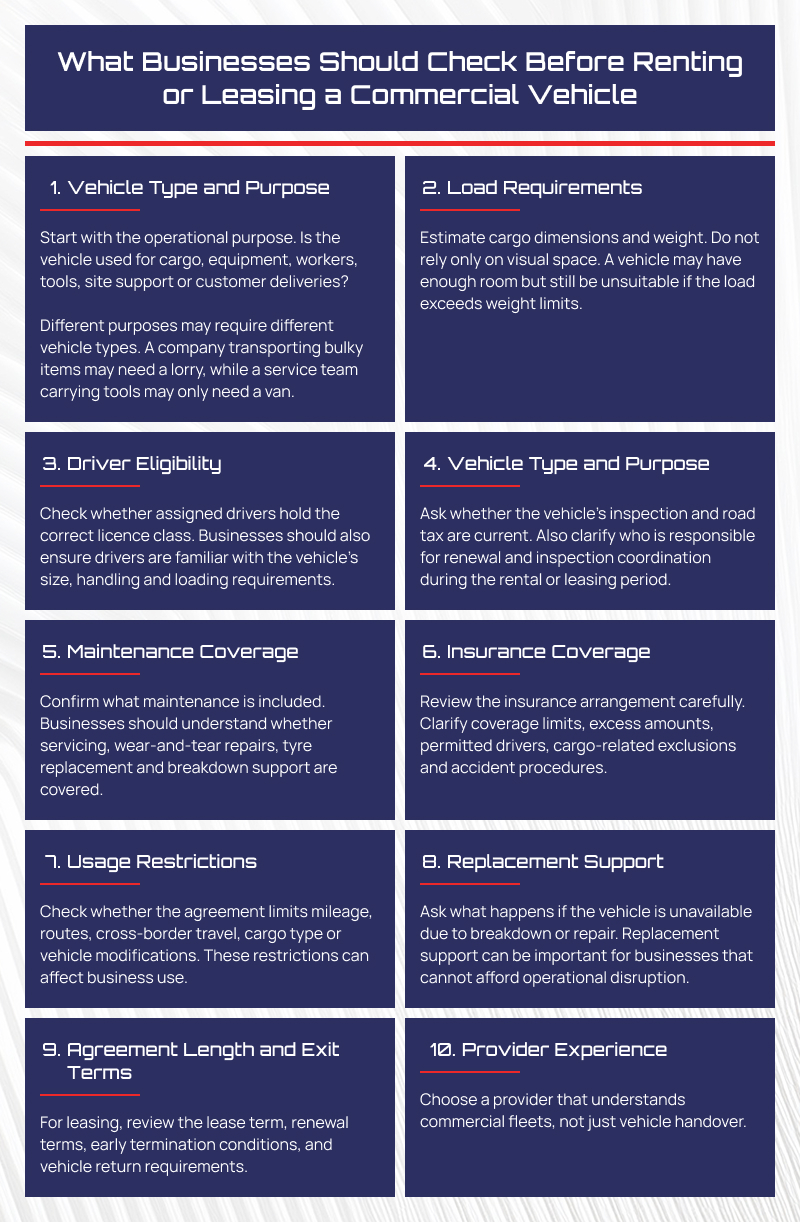
Why the Right Commercial Vehicle Partner Matters
Commercial vehicles are not just assets. They support revenue, service quality and operational reliability.
The right provider can help businesses avoid mismatches between vehicle choices and compliance with Singapore’s commercial vehicle rules. This is especially important for companies that are expanding their fleets, entering new contracts or trying to reduce internal administrative load.
When choosing a provider, businesses should look for:
- A suitable range of commercial vehicles
- Transparent rental or leasing terms
- Clear maintenance support
- Responsive communication
- Experience with business fleet needs
- Properly maintained vehicles
- Support for long-term planning
- Understanding of commercial vehicle rental compliance
For businesses exploring commercial vehicle leasing in Singapore, Edmund Vehicle Rental offers commercial vehicle rental and long-term leasing solutions designed to support operational needs across different sectors.
Whether a company needs to rent a commercial vehicle for project support, a lorry rental in Singapore for cargo movement, or a truck rental for heavier operational requirements, the right arrangement should ensure both vehicle access and confidence in compliance.
Frequently Asked Questions
What are the most important commercial vehicle rules in Singapore?
The most important commercial vehicle rules in Singapore include vehicle registration, COE requirements, road tax, periodic inspections, vehicle roadworthiness, driver licensing, load limits, passenger carriage rules and emissions compliance. Businesses should understand these areas before renting, leasing or purchasing a commercial vehicle.
Do commercial vehicles need to be registered before use?
Yes. Goods vehicles must be registered with LTA before they can be used or driven on public roads in Singapore. Businesses using rented or leased vehicles should confirm that the provider’s vehicles are properly registered and suitable for commercial use.
How often do goods vehicles need inspection?
Inspection frequency depends on the type and age of the vehicle. Goods vehicles generally require periodic inspections, with older vehicles subject to more frequent checks. Businesses should confirm the inspection status before using any rented or leased commercial vehicle.
What licence is required to drive a commercial vehicle?
The required licence depends on the vehicle type and weight. Heavier goods vehicles may require a higher driving licence class. Businesses should confirm that assigned drivers are legally qualified to operate the specific vehicle being used.
Can businesses use lorries to transport workers?
Businesses must follow the applicable passenger carriage rules for goods vehicles. Not every lorry or goods vehicle is automatically suitable for transporting workers. Companies should check the vehicle configuration, seating arrangement and relevant safety rules before using a lorry for manpower transport.
Conclusion
Commercial vehicle rules in Singapore play a major role in how businesses plan, operate and manage their fleets. From COE and road tax to inspections, driver licensing, emissions standards and passenger carriage rules, each requirement affects cost, risk and operational continuity.
For companies that rely on vans, lorries or trucks, compliance should not be treated as an afterthought. It should be part of the decision-making process before choosing whether to purchase, rent or lease.
Ownership may work for businesses with the capital, systems and internal resources to manage every obligation. However, many companies prefer rental or long-term leasing arrangements because they offer clearer cost planning, reduced administrative pressure and better flexibility as business needs evolve.
At Edmund Vehicle Rental, businesses can explore commercial vehicle rental and long-term leasing solutions that support both operational performance and regulatory readiness. Whether you are expanding your fleet, replacing older vehicles, or looking for a more manageable way to access commercial vehicles, Edmund Vehicle Rental can help you choose a solution that aligns with your business needs.
Contact us today to discuss a commercial vehicle arrangement that supports your operations with confidence.